
By Maya & Leo | The Dog Psychology Podcast | cattledogbuch.com
So a bloke told me once that he had a whole goodbye routine.
Every morning, before work, he’d crouch down, take his dog’s face in both hands, and have a little chat. “I’ll be back soon, I promise. Be a good boy. I love you, okay? I won’t be long.” A cuddle. A kiss on the head. One last look from the doorway.
He thought he was being kind. He thought he was reassuring her.
He was, in fact, doing the single most counterproductive thing you can do to a dog who hates being left.
And I get why. It feels like love. It feels like the decent thing to do. Leaving a worried little face behind you and saying nothing at all feels almost cruel.
But here’s the thing nobody explains.
That tender two-minute goodbye isn’t calming your dog down. It’s winding them up. You’re not softening the blow. You’re announcing it, in flashing lights, with a drumroll.
So let’s actually talk about why. Properly.
What Your Goodbye Sounds Like From the Other End of the Lead
Your dog doesn’t speak English. I know, obvious. But it’s worth sitting with for a second, because it changes everything.
When you crouch down and murmur “I won’t be long, I promise,” your dog hears none of the meaning. No reassurance lands. What does land is the package it all comes wrapped in: the sudden softness in your voice, the long eye contact, the extra-affectionate cuddle you don’t normally do at 8am, the heavy sigh, the lingering at the door.
To a dog, that bundle of signals means one thing.
Something big is about to happen. And it’s not good.
Because you only do this when you leave. So the warmth itself becomes the warning. The cuddle is the alarm bell. You’ve spent two minutes carefully teaching your dog that this exact tender moment is the thing that comes right before the world ends.
And then the door clicks shut, and the dog is left sitting in the emotional wreckage of a very dramatic farewell, with all that feeling and nowhere to put it.
The Emotional Gap That Does the Damage
Now think about what happens next. Not just at the goodbye, at the contrast.
You go from maximum you, close, warm, cooing, hands-on, to zero you. Gone. Silence. An empty house.
That cliff-edge is the problem. The bigger the fuss on the way out, the higher you’ve climbed your dog’s arousal right before you vanish. So the fall is further. The gap between “you, right here, being lovely” and “you, gone” is enormous, and your dog has to absorb that whole drop in the first few seconds alone.
Same thing on the way back in, by the way. The ecstatic, high-pitched “WHO’S A GOOD BOY, I MISSED YOU SO MUCH” reunion at the door teaches your dog that your return is also a massive, electric, emotional event. Which means your absence was a massive emotional event too. You’ve put a spotlight on the very thing you want your dog to feel relaxed about.
The goal isn’t a warmer goodbye. The goal is to make your coming and going so unremarkable that your dog stops noticing it at all.
The Free Technique. Use It Tonight.
Make your departures and arrivals boring. Aggressively, deliberately boring.
Here’s how it works in practice.
For about ten minutes before you leave, go quiet and neutral. No special cuddle. No farewell speech. No guilty looks. You’re just a person moving calmly around their own house. Pop your shoes on the way you’d put the kettle on, like it means nothing, because to your dog, it should mean nothing.
When you actually leave, leave. No words, or at most a flat, throwaway “back later” in the same tone you’d say it to a flatmate. No crouching. No eye contact ceremony. Open door, through door, shut door. Undramatic to the point of being almost rude.
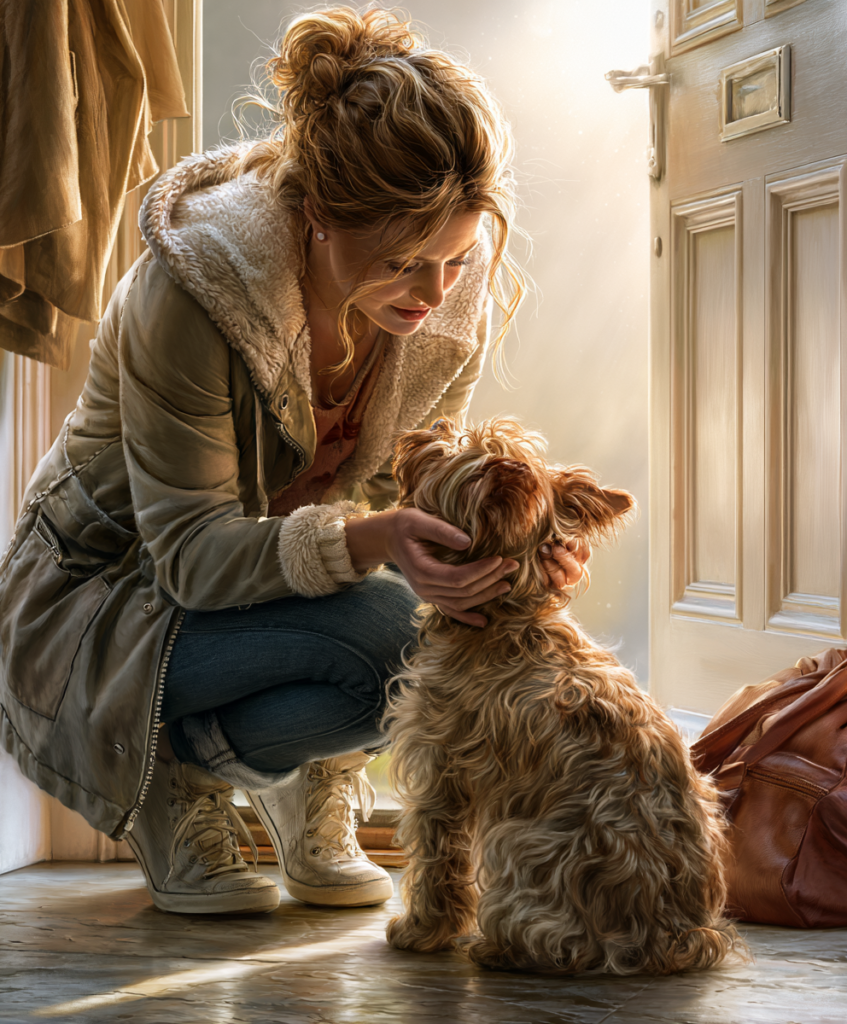
And when you come home, this is the hard bit, ignore your dog for the first minute or two. I know. It feels heartless. But don’t make eye contact, don’t fuss, don’t do the voice. Hang your coat up. Put your bag down. Pour a glass of water. Wait until your dog has stopped bouncing and has all four paws calmly on the floor. Then you say hello, warmly, on your terms.
You’re not withholding love. You’re teaching one quiet lesson, over and over:
Me leaving is nothing. Me coming back is nothing. There is nothing here to panic about.
Do that consistently and you flatten the whole emotional rollercoaster. No peak on the way out, no crash on the way in. Just a calm, flat line your dog can finally relax into.
For Some Dogs, Calm Goodbyes Aren’t Enough
Here’s where honesty matters.
If your dog is mildly clingy at the door, undramatic goodbyes alone might genuinely fix it within a couple of weeks. Lovely. Job done.
But if your dog is in real distress, howling the moment you’re gone, destroying door frames, soiling the floor, hurting themselves trying to get to you, then making your goodbyes boring is step one of about fifty. It’s necessary. It’s just not sufficient. A dog in genuine panic needs more than a calmer exit. They need their whole relationship with being alone rebuilt, slowly, from the ground up.
And that’s a method, not a mystery.
What Actually Rebuilds the Calm
The boring-goodbye technique is really one piece of a much bigger picture: changing what your departure cues mean.
The keys. The coat. The shoes. The door. Right now, every one of those is a little trigger that spikes your dog’s dread before you’ve even left. The full fix is to defuse each of those signals, one at a time, and then rebuild your dog’s tolerance for being alone in increments so small the panic never fully fires, until “alone” quietly stops meaning “abandoned.”
That’s exactly what we’ve laid out, step by step, in Home Alone: The Calm-Dog Guide to Ending Separation Anxiety. It’s the full four-week protocol: how to dismantle the pre-departure dread, the day-by-day plan that retrains the panic out without a single telling-off, and the printable trackers so you can watch the progress happen instead of guessing at it.
The boring goodbye is the free bit. It works. Start there tonight.
Get Home Alone on Gumroad →Click HERE
But if your dog needs the whole plan, if a calmer exit was only ever going to be the first brick, you’ll find the rest of the wall in there.
Because the kindest thing you can do for an anxious dog isn’t a warmer goodbye.
It’s a goodbye so calm they barely notice you’ve gone.
Maya & Leo host The Dog Psychology Podcast, exploring the hidden emotional life of dogs for owners who want to go beyond the basics. New episodes every week at cattledogbuch.com
Leave a Reply