By Maya & Leo | The Dog Psychology Podcast
If you own a dog, someone has almost certainly told you to take them to a dog park.
For exercise. For socialisation. To “tire them out.” To let them “be a dog.”
It sounds completely reasonable. Dogs need other dogs. Dogs need to run. And there, conveniently, is a fenced area full of both.
Here is the uncomfortable part.
For many dogs, probably the majority, regular dog park visits are not building a well-socialised, confident animal. They are doing the opposite. They are rehearsing chaos, rewarding over-arousal, and quietly creating the exact behavioural problems their owners are hoping to prevent.
This is not a popular thing to say. Say it at a dog park and you will get some looks.
But the behaviour science behind it is solid, and once you understand what is actually happening inside those fences, it is very hard to unsee.
What Dog Socialisation Actually Means (Most People Have It Wrong)
When dog owners say “socialisation,” they typically mean exposure to other dogs and people, preferably lots of them, as often as possible. The more interactions, the better. A dog who has met hundreds of other dogs must be well-socialised. Right?
Not necessarily. Not even close, in many cases.
Real dog socialisation, the kind that produces a genuinely stable, confident animal, is not about the quantity of interactions. It is about what the dog learns from them.
Dr. Ian Dunbar, who has been shaping modern dog training philosophy for decades, describes the goal this way: you want a dog who is neutral around novel stimuli. Not excited. Not anxious. Not reactive in any direction. Neutral. A dog who can encounter a stranger, another dog, a child on a bicycle, a man in a hat, and simply not find it particularly interesting.
That is the target. Calm confidence. Easy indifference. The ability to exist in the world without being destabilised by it.
Now ask yourself honestly: is a dog park designed to produce that outcome?
A dog park is a fenced area where multiple dogs, unknown to each other, of varying sizes, ages, temperaments, and training histories, are released simultaneously with no structure, no supervision beyond anxious owners scrolling their phones, and no off switch.
The emotional temperature in that environment is, virtually by design, the opposite of neutral.
What Is Actually Happening Inside the Fence
Walk into a dog park and watch, not just the dogs who appear to be playing nicely, but all of them. Watch what the bodies are doing. Watch who is trying to leave and cannot. Watch who has not stopped moving since the gate opened.
Over-Arousal
The first thing most dogs experience when they enter a dog park is a spike in arousal that, from a neurological standpoint, is closer to panic than pleasure.
Over-arousal is not the same as excitement, though they look similar from the outside. Arousal, in behavioural terms, refers to the activation level of the nervous system. A dog who is highly aroused has a nervous system running fast and hot, processing information quickly, reacting rather than thinking, operating largely from instinct rather than learned behaviour.
A highly aroused dog cannot:
- Read calming signals from other dogs
- Make good social decisions
- De-escalate a tense interaction
- Process commands from their owner
Dog parks reliably produce high arousal in most dogs. The density of unfamiliar scents, the sounds of barking and running, the visual chaos of multiple moving bodies, the absence of any familiar structure, all of it drives the nervous system upward. For many dogs, that spike begins before they even get through the gate. The anticipation alone is enough to push them into a state where good choices are no longer available to them.
The Bullying Nobody Names
Not all dogs in a dog park are bullying. But in almost every dog park, on almost every visit, some degree of bullying is happening, and most owners either do not recognise it or actively excuse it.
Healthy dog play has a recognisable structure:
- Role reversal: the dog who is chasing becomes the dog who is chased
- Consent checks: pauses where both dogs reset and choose whether to continue
- Loose, bouncy body language rather than stiff and directed movement
What happens in many dog park interactions does not look like this.
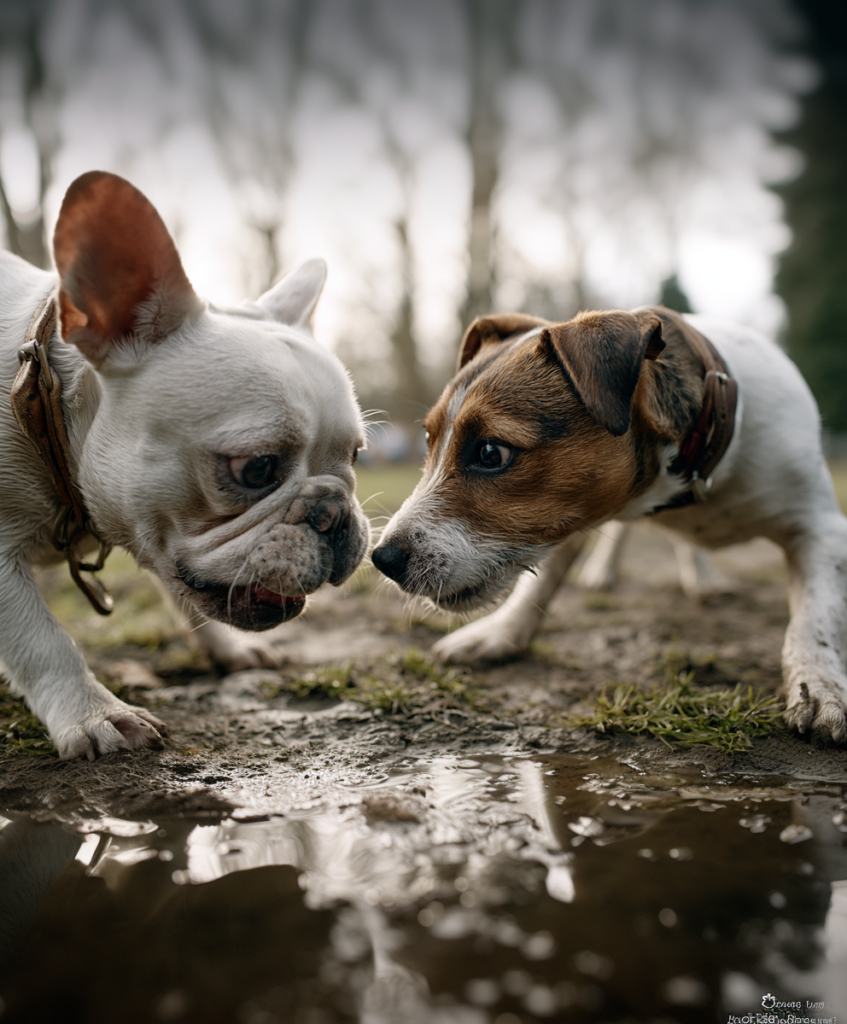
It looks like one dog relentlessly pursuing another who is clearly trying to disengage. It looks like a group gathering around a single smaller or more anxious animal, who has nowhere to go. It looks like a dog who keeps pinning, not pausing, not resetting, while the dog underneath goes still.
The dog on the receiving end is not fine. They are learning, through repeated experience, that the presence of other dogs means unpredictable, inescapable pressure. That lesson has a name in behaviour science. It is the beginning of leash reactivity. The beginning of dog-directed aggression. The beginning of a dog who loses all composure at the sight of another dog across the street.
The park did not socialise that dog. It traumatised them, slowly, visit by visit, while everyone assumed they were having fun.
Predatory Drift
Predatory drift is a phenomenon where a dog whose arousal has spiked past a certain threshold switches from play behaviour into predatory behaviour. The trigger is often movement: a smaller dog suddenly running, a dog making a high-pitched noise, a dog going limp or still. What was a boisterous game becomes, in a fraction of a second, something with a fundamentally different quality.
It is not the dog being vicious. It is a nervous system pushed into a state where the prey drive activates and overrides everything else. Predatory drift is most likely in high-arousal environments with significant size disparities between dogs. Dog parks routinely meet all of those conditions at the same time.
The Rehearsal Problem
Every time a dog practises a behaviour, that behaviour becomes more available to them. More automatic. More likely to be reached for in the future. Repeated experience lays down neural pathways. Those pathways become highways.
A dog who visits a dog park regularly and spends that time in a state of high arousal is rehearsing high arousal. They are laying down, visit by visit, the neural architecture that associates the presence of other dogs with frantic, poorly-regulated behaviour.
Then they go on a lead walk and see a dog across the street.
And their owner wonders why they lunge.
The dog park did not tire out a social, happy animal. It created an animal that has practised, dozens of times, that other dogs equal chaos.
The Owner’s Side: Guilt and the Myth of the Tired Dog
Dog owners are busy. Dogs have energy. The equation most owners work from: if the dog is physically exhausted, they will be calm and well-behaved. A dog park achieves that in forty-five minutes with minimal effort from the owner.
It is also, unfortunately, largely counterproductive.
Physical exercise and mental load are not the same thing. A dog who has been doing zoomies for an hour with other over-aroused dogs has been physically active, but their nervous system has been running at maximum capacity throughout. They come home not rested but wired. Tired but cannot settle. That is the profile of a nervous system that needs to come down from a prolonged arousal spike.
Contrast this with a dog who has spent thirty minutes on a structured sniff walk, nose down, exploring at their own pace. Or fifteen minutes of genuine training. Or an hour of calm one-on-one play with one familiar dog.
That dog comes home and sleeps. Deeply. Because their nervous system has been genuinely engaged and is now genuinely resting.
The “tired dog is a good dog” principle is real. But the kind of tired that matters is not just in the legs. It is in the brain.
This applies with particular force to intelligent, high-drive working breeds. An Australian Cattle Dog, bred for generations of intense mental work, herding, problem-solving, and environmental control, needs mental engagement far more than physical chaos. For a Cattle Dog, an hour at a dog park is not enrichment. It is an hour of every instinct they have being triggered with no productive outlet. The result is not a tired, satisfied dog. It is an over-stimulated, frustrated animal who is harder to live with, not easier.
The Guilt Factor
A lot of owners take their dogs to dog parks because they feel guilty. Guilty about the hours the dog spends alone. Guilty about the flat with no garden. The dog park becomes a form of compensation.
But when guilt is driving twice-weekly visits to an environment that is actively making the dog more reactive and harder to manage, the compassionate thing is to look at that clearly.
Your dog does not need a dog park. Your dog needs you. Your time, your attention, your presence on a quiet walk where they can actually be a dog.
What Real Dog Socialisation Actually Looks Like
So if not the dog park, then what?
The Critical Socialisation Window
The most important socialisation happens before sixteen weeks of age. During this critical period, the puppy’s brain is literally wiring itself based on what it encounters. The goal is exposure at an intensity that keeps the puppy under threshold.
Under threshold means the puppy notices the thing but is not overwhelmed by it. They can take a treat. They can look away. They can disengage.
A puppy carried past a busy road at a safe distance, eating a treat while watching the traffic, is being socialised to traffic. A puppy placed in the middle of chaos, overwhelmed and unable to cope, is being flooded. Flooding does not produce confidence. It produces fear that can last for years.
Quality Over Quantity
One well-matched, well-supervised interaction with a known dog is worth more in socialisation terms than ten chaotic encounters at a park.
What makes an interaction well-matched:
- Both dogs similar in size and energy level
- Both have the genuine opportunity to disengage
- Play has role reversal and natural consent checks
- Humans are watching the dogs, not their phones
Counter-Conditioning for Neutrality
One of the most useful things an owner can teach is genuine indifference to other dogs at a distance. This is built through counter-conditioning: repeatedly pairing the sight of a dog at a comfortable distance with something high-value, until the dog’s automatic emotional response shifts from arousal to pleasant anticipation.
Slow work. Real results.
Structured Activities
Dogs who do structured activities with their owners, trick training, nose work, agility, even basic obedience, develop focus on their human in the presence of distractions. This is the quality that makes everything else possible. It is built in ten-minute sessions in the garden, not at a dog park where the dog’s attention is everywhere except on you.
But My Dog Loves the Dog Park
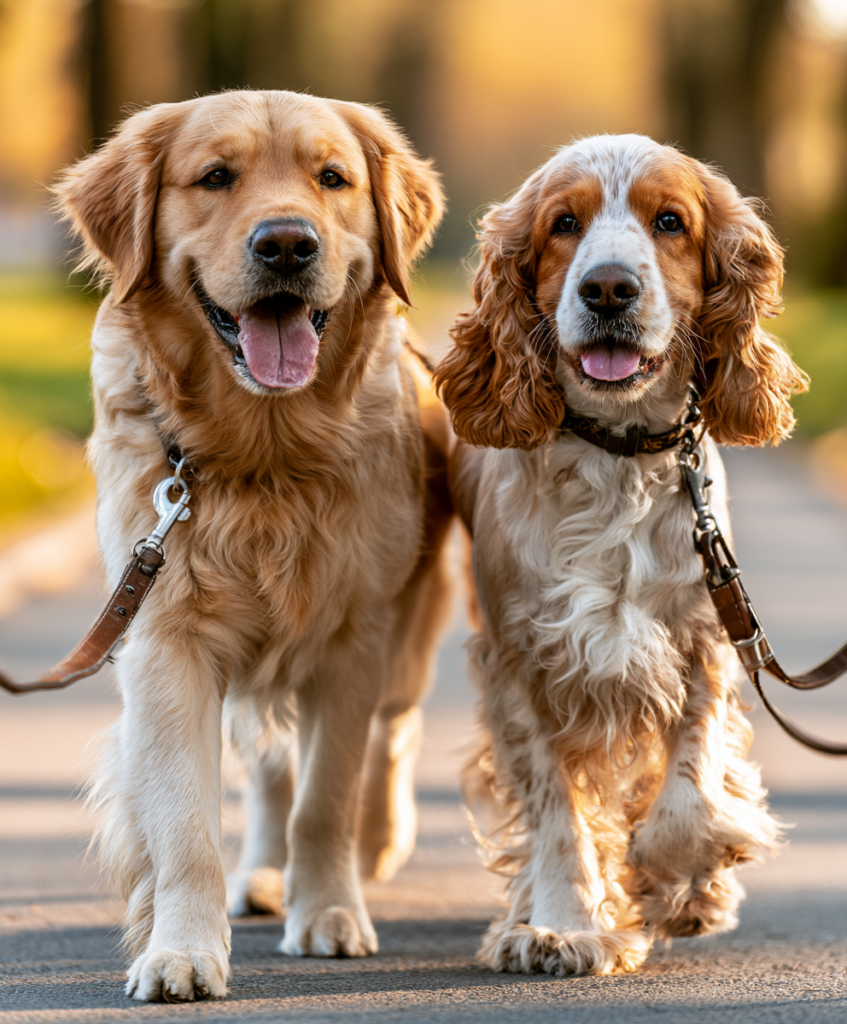
Some dogs genuinely enjoy dog parks. They have the right temperament, the right socialisation history, and the capacity to self-regulate even in high-arousal environments. For these dogs, with owners who are actively watching and ready to intervene, dog park visits are probably fine.
But they are a small minority.
Signs your dog is thriving at the park:
- Runs to the gate enthusiastically
- Stays loose and bouncy throughout
- Takes voluntary breaks
- Engages in two-way play with role reversal
- Comes home and settles within thirty minutes
Signs your dog is struggling:
- Spends the visit pressed against the fence or your legs
- Is relentlessly pursued with no escape
- Cannot settle for hours after returning home
- Behaviour on walks has been worsening since regular park visits began
Watch the dog. Not the idea of what the dog park is supposed to be providing.
What To Do Instead: A Practical Guide
Understanding the problem is one thing. Having something concrete to replace it with is another.
The sniff walk. Twenty to thirty minutes of your dog leading, nose down, at their own pace. Sniffing engages the brain, processes the environment, and produces genuine tiredness. One good sniff walk does more for a dog’s nervous system than an hour of frantic play.
The one-on-one playdate. One dog your dog genuinely likes. Neutral ground. Watch for consent checks. Twenty calm minutes of this is worth more than an afternoon at the park.
Nose work at home. Hide treats around the house or garden. Use a snuffle mat, a Kong, a puzzle feeder. Ten minutes, and many dogs are ready for a genuine nap.
Short, positive training sessions. Five to ten minutes, one thing at a time, kept positive and playful. Building the habit of paying attention to you and finding that attention rewarding.
None of these is as easy as opening a gate. All of them produce better, more lasting outcomes.
The Counterintuitive Truth
Less is almost always more when it comes to dog socialisation.
Less exposure to chaos produces less reactivity. Less over-arousal produces better regulation. Less forced interaction with strangers produces more genuine confidence.
The dog who has had a hundred chaotic dog park visits is not more socialised than the dog who has had thirty carefully managed, calm interactions. In most cases, they are considerably less stable.
Building a genuinely well-socialised dog takes time, attention, and the willingness to make quiet choices: the sniff walk instead of the park, the one-on-one playdate instead of the free-for-all, the ten minutes of training instead of the hour of chaos.
Your dog does not need more dogs. Your dog needs a world that makes sense to them. Predictable, manageable, navigable.
That is what a genuinely well-socialised dog looks like.
Not a dog who has been everywhere and met everyone.
A dog who can go anywhere, and feel fine.
Maya & Leo host The Dog Psychology Podcast, for owners who want to understand their dog at a level that actually changes things. New episodes every week.